
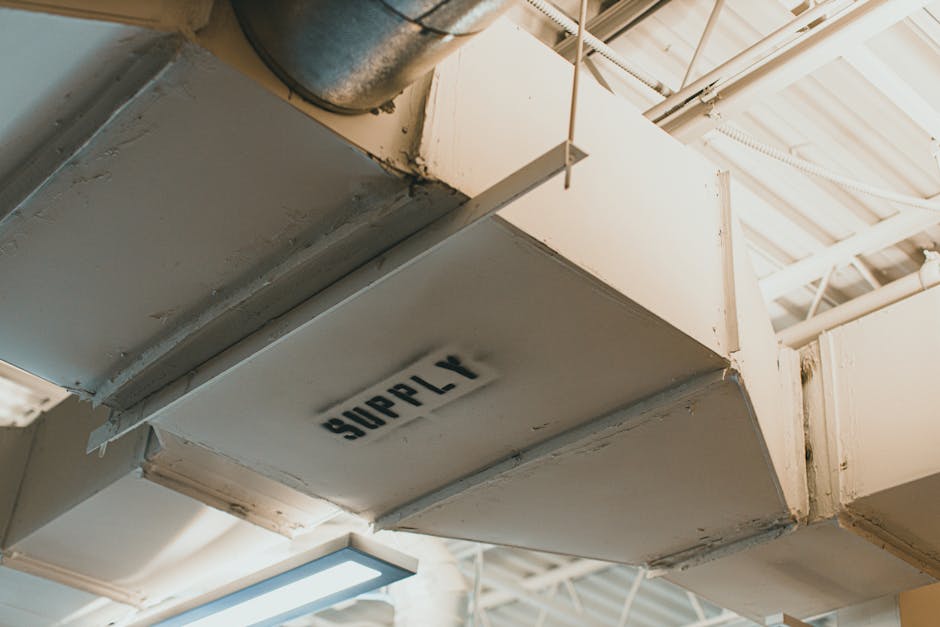
Late September through October is the only stretch of the year in Cook County when your ducts aren't doing much. The AC is off. The furnace hasn't started its long run yet. That's the window — and it closes fast, usually the first week of real cold when everybody who's been putting off a service call starts dialing at once.
Here's the concrete consequence of skipping it. Leaky, undersized ductwork wastes 20 to 30 percent of the air your system paid to condition. In July that showed up as a second floor that never got below 78 and air that felt clammy even when the thermostat was satisfied. In January the same holes and the same restrictions show up differently: cold rooms at the end of long runs, a furnace that short cycles on its high-limit switch because it can't dump heat fast enough, and a gas bill that runs 20 percent higher than your neighbor's for the same square footage. Same defect. Two different complaints. One fix.
Why summer symptoms and winter symptoms have the same root
Air doesn't care what temperature it is. A trunk line with a separated joint over an unconditioned attic loses 90-degree air in August and 130-degree air in February through the same gap. A return that's too small for the blower — common in Skokie's 1940s and '50s bungalows and Cape Cods, where a second floor got finished later and nobody added return air — restricts flow in both directions.
The number that tells you the truth is static pressure. It's the resistance the blower fights, measured in inches of water column, and most residential systems are designed for about 0.5. Plenty of houses measure 0.9 or higher. High static means the blower is straining, the coil isn't getting the airflow it needs, and your efficiency rating on the equipment label is fiction. A 16 SEER2 condenser on choked ductwork performs like a much cheaper one.
This is why we're skeptical when the first move in a comfort conversation is a replacement quote. Swap the box, keep the ducts, and you've bought a new problem at the old price.
The shoulder-season duct checklist
Change the filter and note the thickness. DIY. One-inch filters need changing every one to three months — monthly if you have pets or an old plaster house shedding dust. And stop buying the highest MERV number on the shelf for a one-inch slot. It restricts airflow more than it cleans, which is the opposite of what you wanted. If air quality matters to you, the answer is a four- or five-inch media cabinet, not a denser one-inch.
Open every register and every return grille. DIY. Closing vents in the spare bedroom doesn't save money. It raises static pressure, pushes the blower harder, and forces more of your conditioned air out through duct leaks into the attic or crawlspace. Walk the house and open them all, including the floor registers under furniture.
Look at your accessible duct joints with a flashlight. DIY inspection, pro repair. In a Skokie basement you can usually see the trunk and takeoffs. Look for gaps at the joints, cloth duct tape that's dried out and peeled off, and gray fiberglass insulation stained dark where air has been blowing past it for years. That staining is the smoking gun. Cloth tape fails; mastic and foil-backed tape don't. Sealing a live trunk line properly isn't a caulk-gun afternoon.
Check the attic runs before the snow makes the attic miserable. Pro, mostly. Flex duct in an unconditioned Chicago-area attic is the hardest-working ductwork in the house and the least inspected. Look for crushed sections, long sagging runs that have kinked, and disconnected boots at the ceiling registers. Attic runs also need R-8 insulation to do their job when it's 5 degrees outside; a lot of 1990s flex up there is R-4 at best.
Ask for measured airflow, not an opinion. Pro. A proper duct evaluation includes static pressure readings at the supply and return, temperature rise across the heat exchanger, and airflow per room. Temperature rise is printed right on the furnace data plate, usually a 35- to 65-degree window. If your furnace is running above that range, it isn't moving enough air, and that's a ductwork conversation, not a furnace conversation.
Get the return air situation looked at honestly. Pro. If your second floor has supply registers and no return, that room can only get as much air as can leak back out under the door. Cool or warm air has to leave a room for more to come in. Adding a return is real work — cutting into joist bays or building a chase — but it's a one-time fix that pays in both seasons.
What this typically costs, and why it isn't a subscription
Sealing accessible joints and mastic work on a basement trunk system runs a few hundred to around $1,500 nationally, depending on how much is reachable. Larger jobs — replacing failed attic flex, resizing a return, rebuilding a plenum — more commonly land in the $1,500 to $5,000 range. Full duct replacement in a two-story house can reach $8,000 or more. Local quotes vary with access, asbestos-era insulation on old octopus systems, and whether the work is happening in a finished basement.
The point is that ducts aren't a consumable. Mastic-sealed joints stay sealed. A right-sized return stays right-sized. Compare that to refrigerant: if a system needs a top-off every spring, it has a leak, and you're renting a repair instead of buying one. Duct work is the opposite kind of spending. You do it once.
If you're weighing a system replacement anyway — a furnace past 15 to 20 years, or a repair quote that's crossed half the cost of new equipment — do the duct evaluation first. Sizing depends on it. A load calculation on a house with 25 percent duct loss gives you the wrong tonnage, and oversizing is how you end up with a house that's cold, clammy, and short cycling all summer. Check current federal and state incentives before you sign anything, too.
If you only do one thing
Get static pressure measured before the furnace runs hard. It's a ten-minute test with a manometer, it costs almost nothing as part of a fall tune-up, and it tells you whether your ductwork is the problem or not. Everything else on this list follows from that number. Every time.